
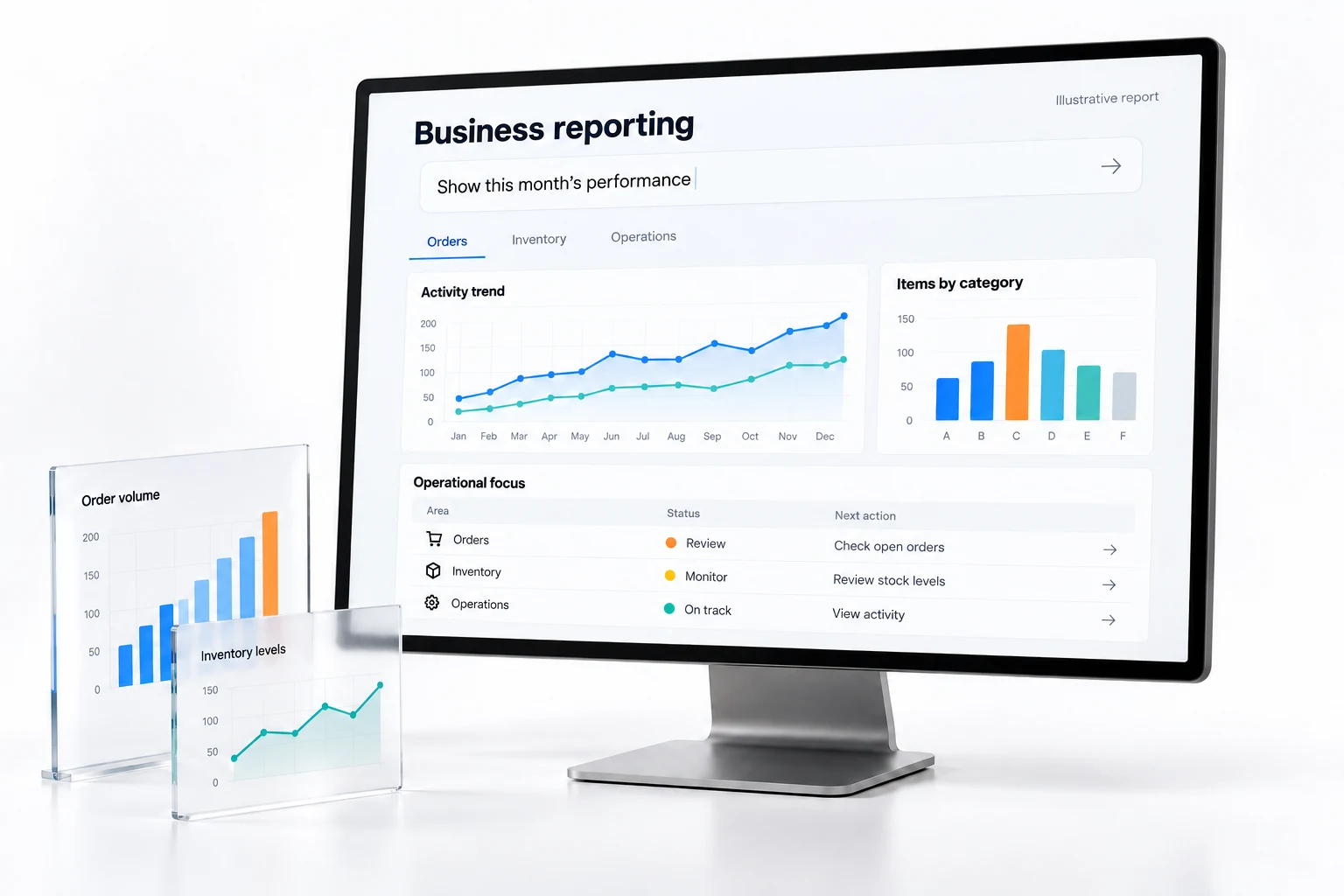
Asking a business question in plain language can make reporting more accessible. The useful work behind that experience is deciding which information the assistant can use, how it should interpret a metric and how a person can check the answer. Those decisions belong in the design from the beginning.
A confident answer still needs a trustworthy foundation.
To apply this workflow in your business, explore our AI business analytics service and implementation approach.
Start with a question your team already asks
Choose a recurring decision, such as reviewing delayed orders or comparing production with plan. Identify the records a person currently checks to answer it. Keep the first scope focused enough that the team can verify the result.
Different departments may use the same word differently. Revenue, available stock and completed production need agreed definitions, date boundaries and treatment of exceptions before they appear in an AI-generated report.
Define access at the source
Map each role to the information it is allowed to see. The design should preserve those restrictions when someone asks a question, follows a drill-down or requests an export. A convenient conversational interface should not become a new route around existing permissions.
Separate information retrieval from actions that change business records. If the first use case is reporting, keep its scope focused on reporting and make any human review steps explicit.
Make answers checkable
A useful result should identify its reporting period and provide enough context to trace the figures to approved records. Show when the source data was last updated where freshness affects the decision.
Test ambiguous questions, missing data and requests outside the agreed scope. The assistant should be able to ask for clarification or explain that it cannot produce a reliable answer. A fluent response is not a substitute for a verified result.
Give the system an owner after launch
Reporting definitions, permissions and source systems change. Assign responsibility for reviewing those changes and keeping evaluation examples current. Include business users in the review, since they understand whether an answer makes operational sense.
Begin with a small set of accepted questions and compare results with trusted reports. Broaden the scope as the team develops confidence in the data and the review process, rather than promising unrestricted answers on day one.
A practical starting checklist
- Defined question and metric
- Approved sources and roles
- Traceable answer with reporting context
- Business review and ongoing ownership
Governed AI reporting is a combination of useful questions, controlled data access, agreed definitions and answers people can verify.
An original guide reflecting our AI & Analytics and AI Chatbots service approach. It does not describe a particular customer's implementation.