Source mapping and normalisation
Map transaction identifiers, account references, currencies and settlement dates. Preserve source records and distinguish a missing import from a genuinely unmatched transaction.

Connect bank statements, payment settlements and ledger records in a reconciliation workflow with reviewable matches, explained exceptions and approved updates.
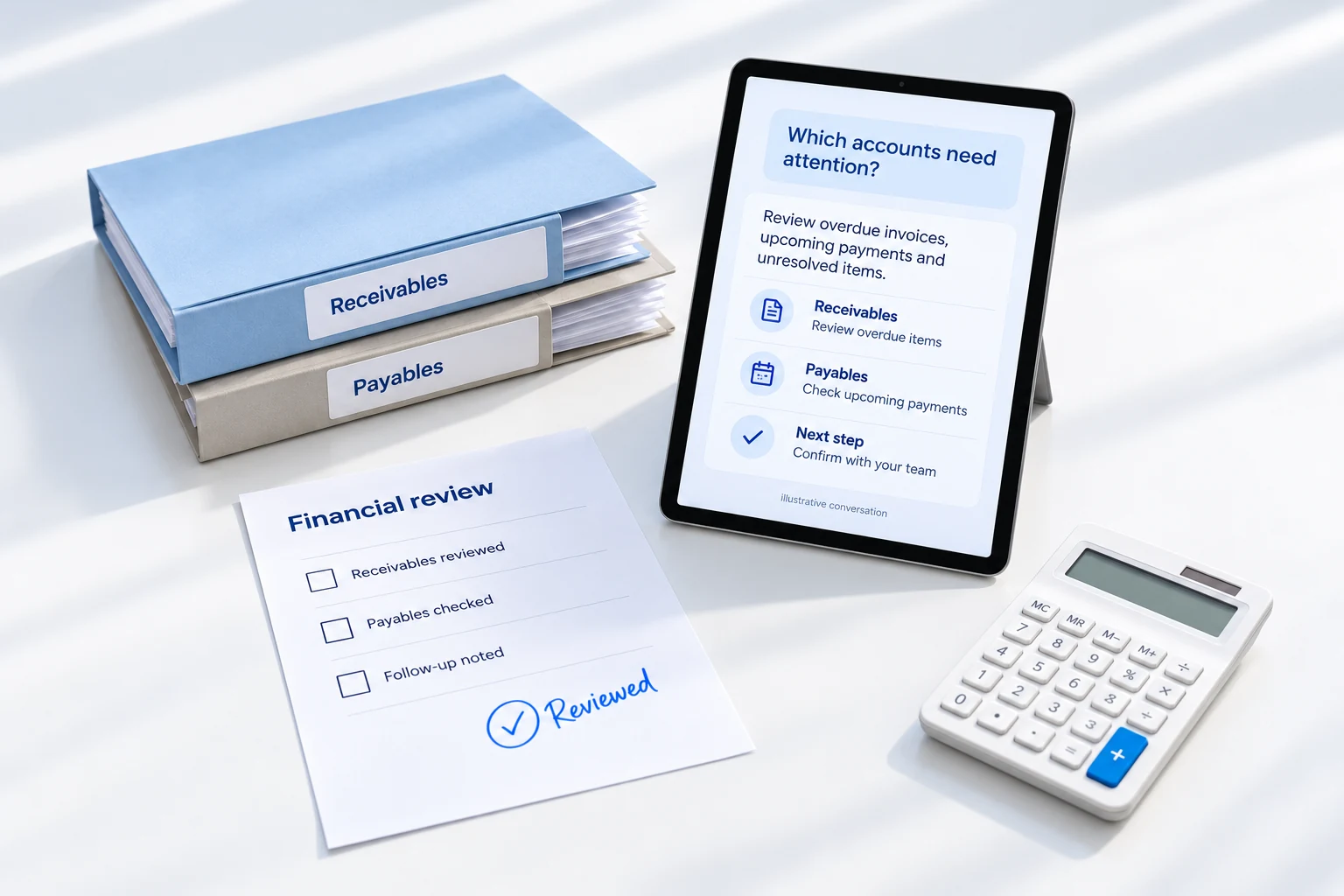
Finance teams often work across bank exports, gateway settlements and accounting records. We build a reconciliation workflow around the actual unit being matched: receipt, settlement or ledger entry. Begin with one account and a known period, agree matching rules with the finance owner and retain the original evidence behind every proposal.
Map transaction identifiers, account references, currencies and settlement dates. Preserve source records and distinguish a missing import from a genuinely unmatched transaction.
Separate exact-reference matches from grouped settlements, fees and timing differences. Show the method used and the records supporting each proposed result.
Route missing receipts, duplicates and amount differences to an owner. Support review decisions and retain the explanation rather than hiding uncertainty in a score.
Start read-only. Where write-back is agreed, bind approval to the reviewed proposal, check the operation outcome and send uncertain cases to follow-up instead of blindly retrying.
A gateway settlement includes customer receipts, a processing fee and a refund. The workflow groups the relevant records, identifies the fee and leaves a remaining timing difference open for finance review. It does not force agreement simply because two totals are close.
Yes. A pilot can import approved records and prepare matches and exceptions without changing the ledger. Write-back is a separate scope decision requiring supported interfaces, permissions and acceptance by the responsible finance team.
Not sure this is the right starting point? Use the solution finder or browse all solutions.
Tell us about your workflow, the systems you use and the problem you want to solve.