Evidence and affected-service context
Connect the incident to relevant alerts, resource identities, recent changes and source records. Separate confirmed observations from investigation hypotheses.

Turn infrastructure investigations into reviewable tickets, recovery checklists and scoped runbook proposals, keeping production changes under explicit authority.
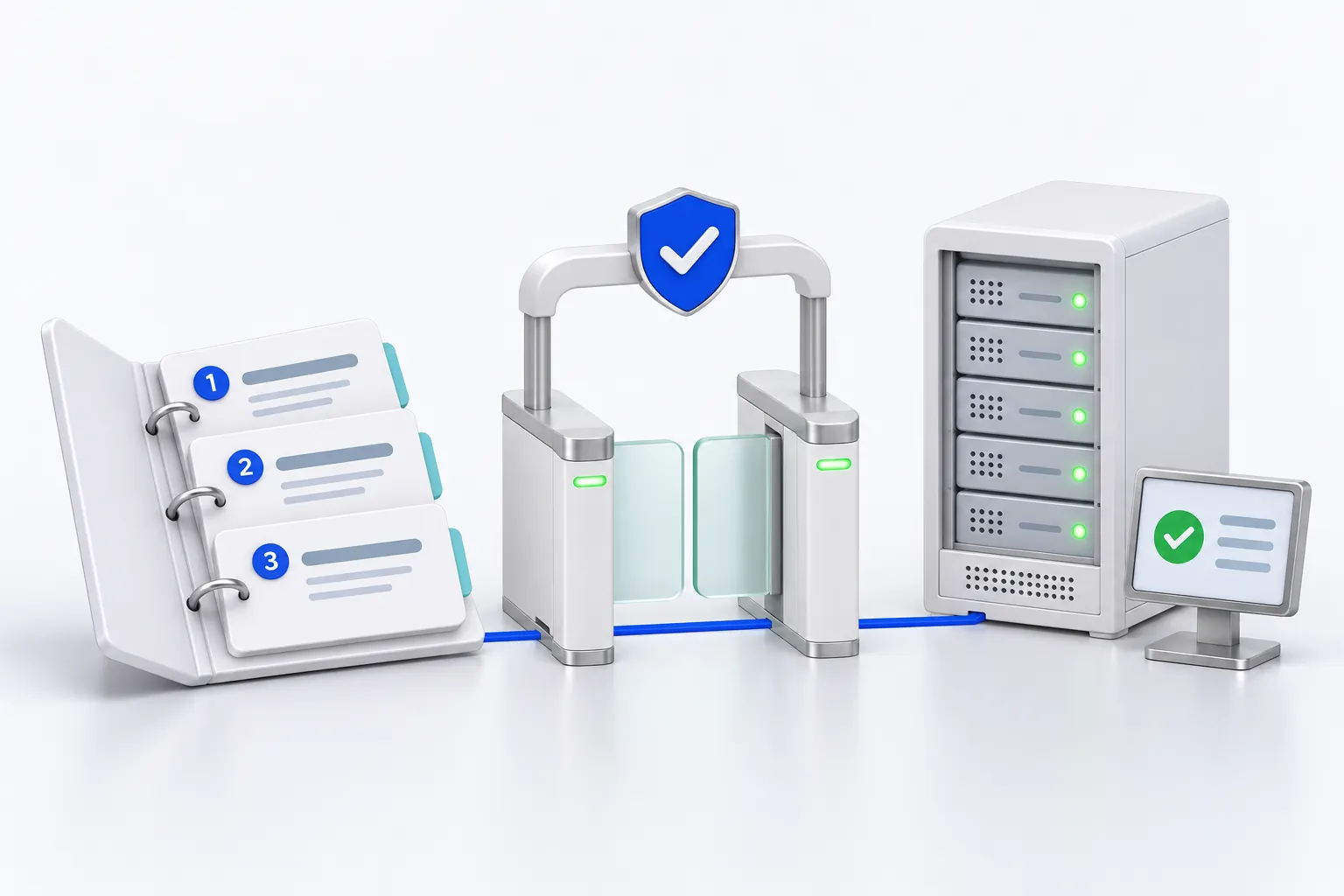
An investigation summary is not permission to change production. This solution connects the evidence gathered during an incident with the people and runbooks allowed to respond. Our broader AI for Infrastructure service covers monitoring and investigation; this focused workflow defines how a proposed response is reviewed, executed and checked.
Connect the incident to relevant alerts, resource identities, recent changes and source records. Separate confirmed observations from investigation hypotheses.
Define actions, prerequisites, parameters and boundaries with the infrastructure owner. Give each proposal an expected result, a recovery route and an approval requirement.
Show the reviewer exactly which action and resources are involved. Recheck permissions and preconditions before execution if the record or service state has changed.
Record what the target system accepted and verify the service state. Route incomplete or uncertain results to an operator rather than assuming success or repeating a potentially disruptive command.
An investigation proposes restarting one application component. The reviewer sees the affected service, prerequisites and recovery plan. If the execution request times out, the workflow checks the component state before another action is considered.
Yes. Start with evidence gathering, ticket preparation and human-executed checklists. Automated execution is a later decision that depends on access, supported tools, tested runbooks and the owner's acceptance criteria.
Not sure this is the right starting point? Use the solution finder or browse all solutions.
Tell us about your workflow, the systems you use and the problem you want to solve.